Sponsoring an orphan is one of the programs donors trust most, and one of the hardest for a charity to administer. There is a beneficiary with a file, a sponsor who commits to a recurring amount, a payment that arrives every month and must be tied to its program, and a family that depends on the support never breaking. When all of this runs on scattered spreadsheets, payments get lost, reminders are late, and nobody can answer when a sponsor asks what their giving achieved. A well-organized orphan sponsorship program brings those threads into one system, and that is what we explain here in Najeed.
Where sponsorship programs break down
The same problems appear in small and large charities alike:
- Scattered beneficiary files: the details are in one place, the documents in another, and what was paid out in a third.
- Payments not tied to a program: money reaches the account and no one knows whether it is sponsorship or general giving.
- Forgotten reminders: a sponsor's payment date passes and nobody reaches out.
- Unanswered questions: a sponsor asks about impact, and the staff member has nothing to send.
The beneficiary file in case management
Sponsorship starts with the family file in case management: members, income, expenses and eligibility score, with documents and the social research. An aid history shows everything paid to the family from any campaign or program, by request and payment date. The system also blocks duplicate aid to the same family within a period the charity sets, until a manager reviews it, so no family receives support twice without management knowing.
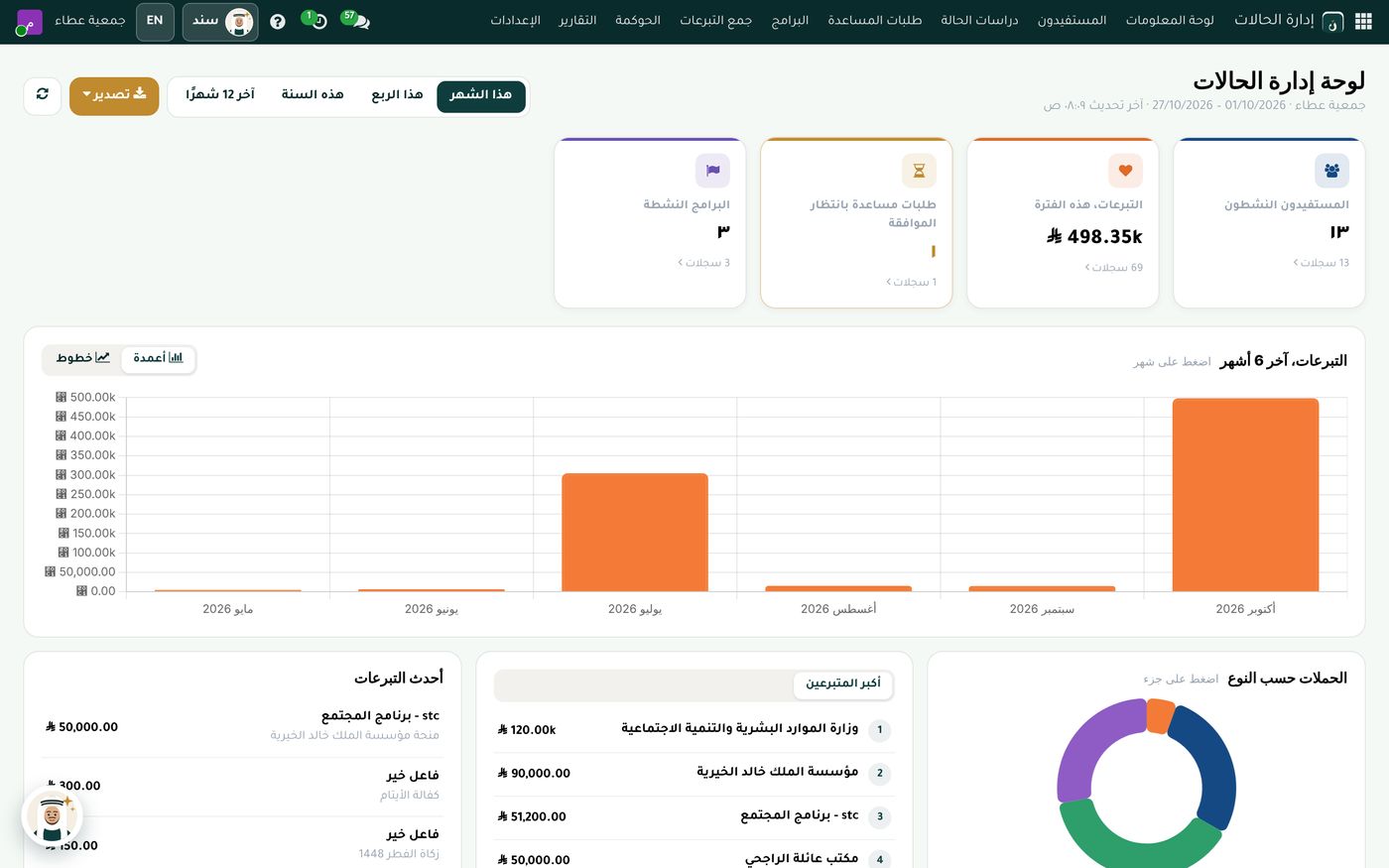
In this demo screen the top cards show the number of active beneficiaries, active programs and donations for the period, plus a highlighted card for aid requests awaiting approval. The director sees at a glance what needs a decision.
The sponsor and the recurring payment
In Najeed a sponsor is a donor with a single file that gathers their gifts, receipts and the charity's communication with them. The system supports recurring donations on a monthly, quarterly or yearly cycle, with a reminder to the follow-up staff member before the due date. That lets staff reach out before a payment with a word of thanks or news of the family being supported, instead of only asking for money. For more on these cycles, read Recurring Donations.
If the charity presents the sponsorship program on its website, the charity store in Najeed offers monthly giving or gifting in someone else's name with an option to hide the name, and each transaction is recorded automatically in the donor's file and campaign.
Every payment in its campaign
Each campaign in Najeed has a target, an amount collected and an amount spent, plus a cost center in accounting. When a sponsorship payment arrives, it goes to its campaign and shows in its report instead of mixing with other income.
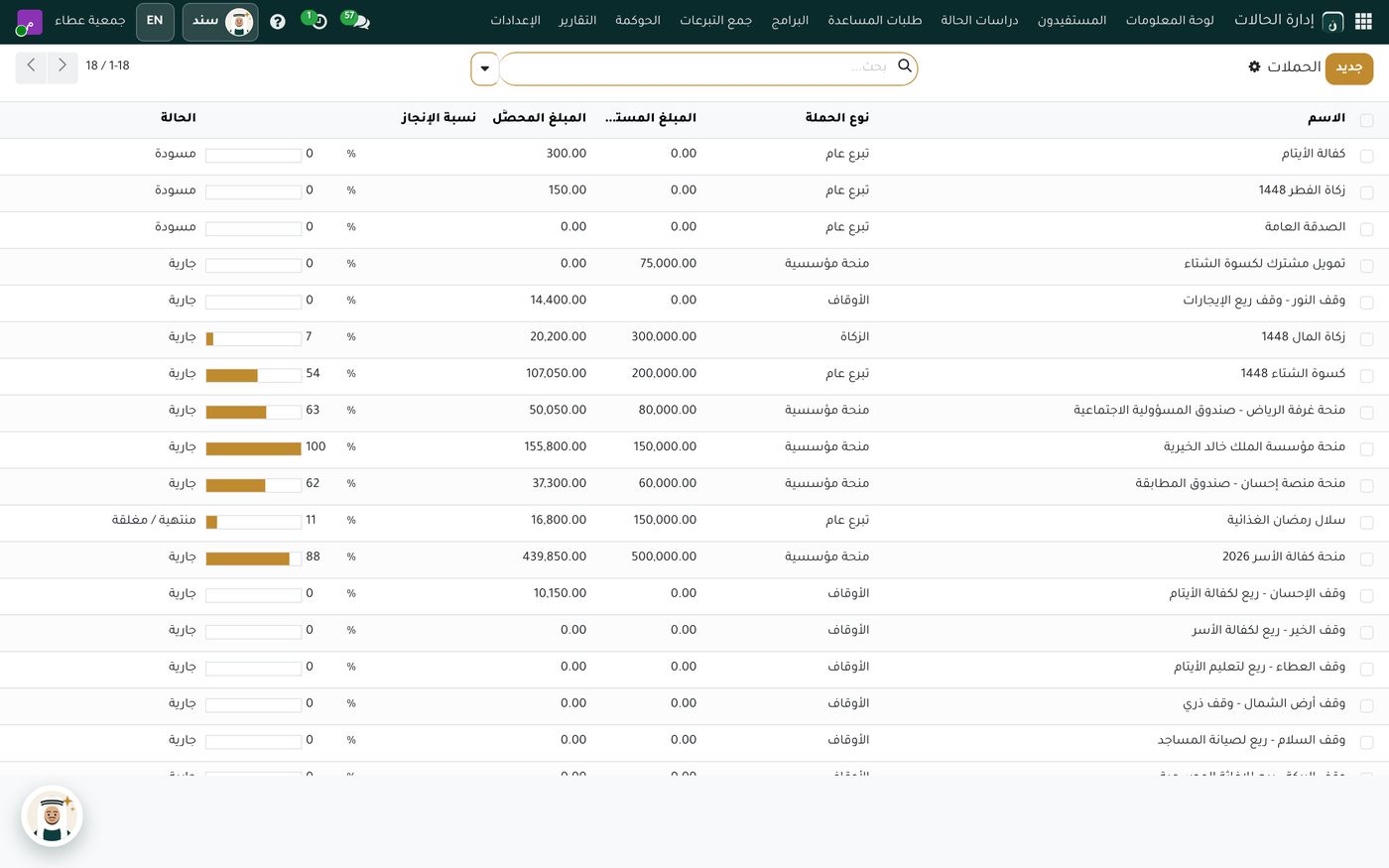
The list includes campaigns tied to sponsorship, such as an "Orphan Sponsorship" campaign, an endowment whose yield is designated for orphan care, and a grant for family sponsorship. Each shows its type and collected amount, and other campaigns show a completion bar. Management can tell which program is nearing its goal and which needs support.
The donations dashboard: who gives, and when
The donations dashboard shows the latest donations with their campaign names, the largest donors, and campaigns by type.
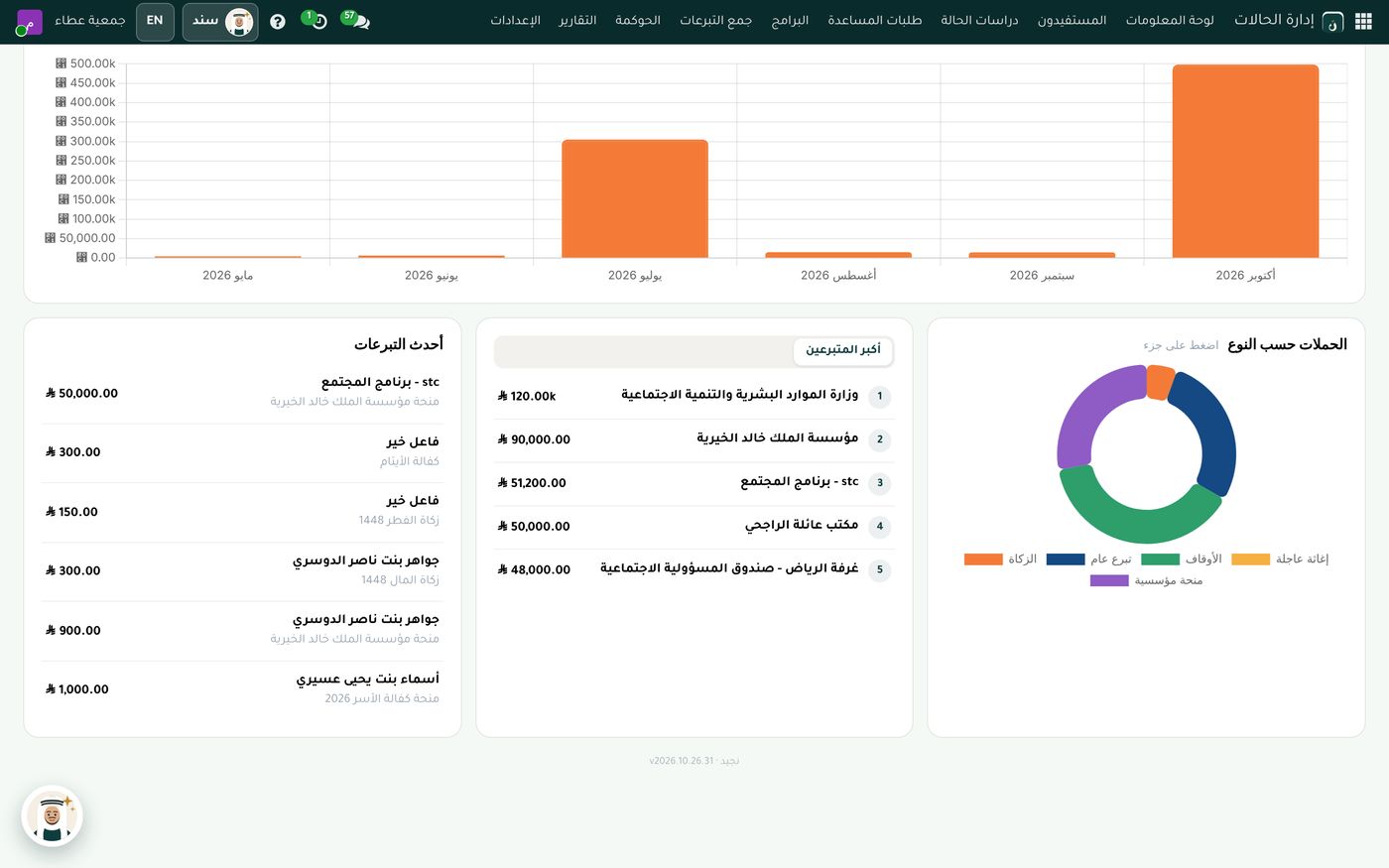
In the latest donations list there is a gift from "a doer of good" to the "Orphan Sponsorship" campaign, an example of how every amount is linked to its donor and campaign. From this dashboard management reads how giving varies from month to month and sees who deserves special attention.
The impact report: what keeps a sponsor giving
The main reason sponsors stop is that they don't know where their gift went. So Najeed emails the donor an impact report showing what they gave, the families their giving reached and photos from the campaigns. When a sponsor receives it on time, the relationship becomes renewed trust rather than a payment made and forgotten.
Practical steps to organize the program
- Open a dedicated sponsorship campaign with a clear target so its payments are visible on their own.
- Complete each family's file with documents and social research before payments begin.
- Register sponsors as recurring donors on a cycle that suits each one.
- Assign a follow-up staff member who receives the reminder before every payment.
- Send the impact report on schedule rather than waiting until you need a new gift.
Summary
A successful orphan sponsorship program rests on a complete family file, a sponsor with a cycle and a reminder, a payment tied to its campaign and recorded in accounting, and an impact report that renews trust each time. If you'd like to see it on demo data, the Role8 team will be glad to show you, and you can ask the AI assistant Sanad, an assistant built for your organization.
Try Donors and campaigns in Najeed
Try Najeed with demo data, or contact us and we'll set up the system for you.